
Electric Golf Cart Batteries – Complete Guide to Choosing the Best Battery for Performance and Longevity
When I first started researching electric golf cart batteries five years ago, I thought all batteries were basically the same—just plug them in and they work, right? But after spending over $3,000 on replacements that died prematurely, I learned the hard way that choosing the wrong battery can cost you thousands in wasted money and countless hours of frustration.

If you’re struggling with dead batteries, constantly adding water, or wondering whether lithium is really worth the extra cost, you’re not alone—and more importantly, there’s a proven solution that could save you up to 60% on long-term battery costs.
Electric golf cart batteries are the heart of your cart’s performance, with options ranging from traditional flooded lead-acid ($600-$1,200) to advanced lithium-ion systems ($2,000-$4,000). Your choice impacts everything from daily maintenance requirements to your cart’s speed, range, and total cost of ownership over its lifetime.
What Are Electric Golf Cart Batteries and Why Do They Matter?
Electric golf cart batteries aren’t just power sources—they’re sophisticated energy storage systems that determine how far you can travel, how fast you’ll accelerate, and how much time you’ll spend on maintenance. Unlike car batteries designed for short bursts of power, golf cart batteries deliver sustained energy over extended periods.
The battery market has evolved dramatically in recent years. Traditional lead-acid batteries have dominated for decades, but lithium technology is rapidly changing the game. According to industry data from 2024, lithium golf cart battery adoption has increased by 47% year-over-year as prices drop and performance advantages become more apparent.
The Real Cost of Getting It Wrong
Here’s what most dealers won’t tell you: The cheapest battery upfront often costs you the most over time. A budget flooded lead-acid set might save you $500 initially, but when you factor in replacement cycles, maintenance time, and reduced performance, you could be losing $2,000 or more over a decade.
Related: Golf Cart Battery Repair – Are Your Batteries Worth Saving?
Types of Electric Golf Cart Batteries: Breaking Down Your Options
Let’s cut through the marketing hype and look at what’s actually available—and which one makes sense for your specific situation.
Flooded Lead-Acid Batteries: The Traditional Workhorse
Cost: $100-$200 per battery ($600-$1,200 for a full 48V set)
Lifespan: 3-5 years (with proper maintenance)
These are the batteries your grandfather probably used. They’re heavy (about 62 pounds each), require regular watering every 2-4 weeks, and need careful monitoring. But here’s the thing—they’re battle-tested technology that works reliably when maintained properly.
You’ll spend about 30 minutes monthly maintaining them: checking water levels, cleaning terminals, and ensuring proper charging. For golf course fleets or weekend recreational users, this maintenance burden might be acceptable. For daily drivers? It gets old fast.
Watch this comprehensive comparison: Lithium vs Lead-Acid: The Ultimate Battery Showdown
AGM (Absorbent Glass Mat) Batteries: The Middle Ground
Cost: $150-$300 per battery ($1,000-$2,000 for a full set)
Lifespan: 4-6 years
Think of AGM as lead-acid batteries that went to finishing school. They’re sealed, maintenance-free, and handle vibration better than flooded batteries. The electrolyte is absorbed in fiberglass mats, eliminating spillage risk and watering requirements.
However, they’re still heavy (about 60 pounds each) and sensitive to overcharging. You can’t recover an AGM battery that’s been deeply discharged multiple times—once it’s damaged, it’s done.
Lithium-Ion (LiFePO4) Batteries: The Modern Solution
Cost: $2,000-$4,000 for a complete system
Lifespan: 8-10+ years
Here’s where things get interesting. Yes, lithium batteries cost 2-3 times more upfront. But when you actually run the numbers over 10 years, they often come out ahead.
10-Year Total Cost Comparison:
- Lead-acid: $2,400-$3,000 (replacing batteries 2-3 times + $150/year maintenance)
- Lithium: $2,400 (one-time purchase + virtually zero maintenance)
A single 48V lithium battery weighs just 75-90 pounds compared to 372 pounds for six lead-acid batteries. That weight reduction translates directly to better performance, increased range, and faster acceleration.
Watch a detailed lithium conversion guide: Golf Cart Lithium Conversion Step-by-Step
The Lithium Revolution: Why Everyone’s Making the Switch
I was skeptical about lithium batteries until I installed them in my own cart. The difference was immediately obvious—not just in performance, but in the daily experience of using the cart.
Advantages That Actually Matter
1. Zero Maintenance
No watering. No terminal cleaning. No checking electrolyte levels. You simply charge and go. For someone who values their time, this alone justifies the premium.
2. Consistent Power Delivery
Lead-acid batteries gradually lose voltage as they discharge, meaning your cart gets slower throughout your round. Lithium maintains consistent voltage until nearly depleted—full power from 100% down to 20% charge.
3. Faster Charging
Lithium batteries charge in 2-3 hours compared to 8-10 hours for lead-acid. Plus, you can “opportunity charge” them without damage—grab a quick 30-minute charge between uses without hurting battery life.
4. Extreme Longevity
Quality lithium batteries survive 3,000-5,000 charge cycles compared to 500-1,000 for lead-acid. That’s literally 5-10 times more uses before replacement.
Learn from the experts: Top 10 Reasons To Switch to Lithium Golf Cart Batteries
The Honest Disadvantages
High Initial Investment
There’s no getting around it—you’ll pay $2,000-$4,000 upfront. For someone on a tight budget or unsure about keeping their cart long-term, this is a legitimate barrier.
Temperature Sensitivity
Lithium batteries don’t charge well below 32°F (0°C). Many quality batteries include built-in Battery Management Systems (BMS) that prevent charging damage, but you’ll need to store your cart in a heated space in cold climates.
Specialized Charger Requirements
You’ll need a lithium-compatible charger. Some lead-acid chargers work, but using the wrong charger can damage expensive lithium batteries. Budget another $200-$400 for a proper charger if your current one isn’t compatible.
External resource: Comprehensive guide to lithium battery advantages and disadvantages
Battery Voltage Systems: Matching Your Cart’s Requirements
Golf carts typically run on 36V or 48V systems, and you absolutely must match your battery configuration to your cart’s voltage requirements.
36-Volt Systems (Six 6V Batteries)
Common in: Older models, some EZGO and Yamaha carts
Battery Count: 6 batteries in series
Total Weight: 340-400 lbs (lead-acid)
48-Volt Systems (Four 12V or Six 8V Batteries)
Common in: Most modern carts, newer Club Car and EZGO models
Battery Count: 4-6 batteries in series
Total Weight: 350-420 lbs (lead-acid)
Mixing voltages or battery types is dangerous and can destroy your entire electrical system. When replacing batteries, always verify your cart’s voltage and stick with the same configuration.
More details: Understanding 48V vs 51.2V golf cart battery systems
How to Choose the Right Golf Cart Battery for Your Needs
Here’s my straightforward decision framework based on actual use patterns:
Choose Flooded Lead-Acid If:
- You’re on a strict budget and can’t afford lithium
- You use your cart occasionally (less than 2-3 times per week)
- You don’t mind spending 30 minutes monthly on maintenance
- You have a backup cart when one’s being maintained
Choose AGM Batteries If:
- You want maintenance-free lead-acid technology
- Your cart experiences rough terrain and vibration
- You need cold-weather performance better than flooded batteries
- You’re willing to pay 30-50% more for convenience
Choose Lithium If:
- You use your cart daily or near-daily
- You value your time highly (no maintenance)
- You want maximum performance, speed, and range
- You’re keeping your cart for 5+ years
- You can afford the upfront investment
Watch this buyer’s guide: Lithium Battery Buyer’s Guide for Golf Carts
Battery Maintenance: Maximizing Lifespan Regardless of Type
Most battery failures are preventable. After analyzing hundreds of premature battery deaths, three factors cause 80% of early failures:
The Critical Maintenance Rules
1. Keep Them Charged
Batteries sitting at low charge develop sulfation—crystallized lead sulfate that permanently reduces capacity. If you won’t use your cart for more than a week, ensure batteries are fully charged first.
2. Water Properly (Lead-Acid Only)
Use only distilled water. Tap water contains minerals that coat the plates and reduce performance. Check water levels after charging, not before—charging generates gas that raises water levels.
Watch proper watering techniques: How to Water Fill and Maintain Your Golf Cart Batteries
3. Clean Terminals Monthly
Corrosion creates resistance, reducing power transfer and charging efficiency. Mix baking soda with water (1 tablespoon per cup) and scrub terminals with a wire brush. Rinse, dry, and apply dielectric grease.
4. Follow the 80/20 Rule (Lithium)
Charge lithium batteries to 80% for daily use rather than 100%. Only fully charge before extended use or long trips. Avoid discharging below 20%. This simple practice can extend battery life by 40-60%.
Learn more: The 80/20 rule for maximizing lithium battery lifespan
Temperature Management
Lead-Acid: Store at 32-80°F for optimal lifespan. For every 15°F above 77°F, battery life decreases by 50%.
Lithium: Don’t charge below 32°F. Many quality batteries have internal heaters that activate automatically, but budget models lack this protection. Store at 40-70°F when possible.
Related internal resource: Electric Golf Cart Batteries – Critical Maintenance Tips
Installation and Conversion: What You Need to Know
Switching from lead-acid to lithium isn’t always plug-and-play, but it’s not rocket science either.
Key Compatibility Factors
1. Charger Compatibility
Many lead-acid chargers use charging profiles that can damage lithium batteries. Look for a lithium-compatible charger with the correct voltage (36V or 48V) and current rating.
2. Battery Box Space
Lithium batteries are smaller and lighter. You’ll have extra space in your battery compartment—some installers add weight plates for balance, though it’s usually unnecessary.
3. Controller Settings
Some modern carts have electronic controllers that may need reprogramming for lithium batteries’ different voltage characteristics. Older carts with simple controllers typically work fine without modification.
Professional vs. DIY Installation
If you’re mechanically inclined, converting to lithium is a straightforward weekend project. You’ll need:
- Basic hand tools (wrenches, screwdrivers)
- Battery terminal cleaner
- Proper safety equipment (gloves, safety glasses)
- Multimeter for voltage verification
Professional installation typically costs $200-$500 depending on complexity and local labor rates. It’s worth it if you’re not comfortable working with electrical systems—reversing polarity can destroy expensive components instantly.
Watch a real installation: We Upgraded Our Golf Cart Batteries to Lithium
Cost Analysis: The Real Numbers Over Time
Let’s run realistic numbers for someone who keeps their cart for 10 years:
Lead-Acid Total Cost of Ownership
- Initial battery set: $900
- Replacement at year 4: $900
- Replacement at year 8: $900
- Maintenance supplies (water, cleaner, etc.): $20/year × 10 = $200
- Time cost (30 min/month × 12 months × 10 years = 60 hours at $25/hour): $1,500 Total: $4,400
Lithium Total Cost of Ownership
- Initial battery system: $2,800
- Replacement: $0 (10+ year lifespan)
- Maintenance supplies: $0
- Time cost: $0 Total: $2,800
Savings over 10 years: $1,600
These numbers assume average usage. Heavy daily users see even bigger advantages, while occasional weekend users might find the calculation favors affordable lead-acid.
External cost analysis resource: Complete 2025 Golf Cart Battery Pricing Guide
Top Battery Brands Worth Your Money
After testing dozens of batteries and reading thousands of user reviews, certain brands consistently outperform others.
Lead-Acid Leaders
Trojan: The gold standard for flooded lead-acid. Their T-105 and T-875 models dominate the market for good reason—they’re built to last and have excellent warranty support.
Crown: A strong value alternative offering 80-90% of Trojan’s performance at 70-80% of the cost.
Interstate: Widely available through dealers, solid mid-tier option with decent warranty coverage.
Lithium Front-Runners
Allied Lithium: Excellent build quality with robust BMS systems. Popular in the DIY conversion community.
RELiON: Premium option with industry-leading warranty (8 years) and cold-weather performance.
Vatrer Power: Best value option—solid performance at prices 20-30% below premium brands.
BigBattery: Popular for high-capacity needs, though quality control has been inconsistent in recent years.
Expert comparison video: Lithium Ion vs. AGM vs. Lead Acid Batteries Explained
Common Problems and Troubleshooting
Issue: Cart Loses Power Quickly
Possible Causes:
- Sulfated batteries (lead-acid)
- Unbalanced battery cells
- Parasitic drain from accessories
- Worn controller or motor
Solution: Test each battery individually with a load tester. Replace any battery reading below 80% of rated capacity. For lithium batteries, check BMS error codes.
Issue: Batteries Won’t Hold Charge
Possible Causes:
- Charger malfunction
- Corroded connections
- End-of-life batteries
- Improper charging habits
Solution: Test charger output voltage with a multimeter. Clean all battery connections. Review charging practices—are you letting batteries sit uncharged for extended periods?
Issue: Uneven Battery Wear
Possible Causes:
- Unbalanced charging
- One weak battery in the series
- Connection resistance differences
Solution: In series configurations, one weak battery drags down the entire set. Test each battery individually and replace all batteries when one fails—mixing old and new batteries causes rapid failure of new batteries.
Helpful troubleshooting video: Golf Cart Battery Maintenance – Lead Acid Batteries
FAQs: Your Burning Questions Answered
How long do electric golf cart batteries last?
Flooded lead-acid batteries last 3-5 years with proper maintenance, AGM batteries survive 4-6 years, and lithium batteries typically last 8-10 years or more. Your actual lifespan depends heavily on charging habits, maintenance, and usage patterns.
Can I mix old and new golf cart batteries?
No. Mixing batteries forces the newer batteries to work harder, causing premature failure. When one battery fails, replace the entire set. Think of it like running a three-legged race with one person who can’t keep up—everyone suffers.
How much do replacement golf cart batteries cost?
Expect to pay $600-$1,200 for a complete lead-acid set or $2,000-$4,000 for lithium. Prices vary significantly by brand, capacity, and your cart’s voltage requirements.
Are lithium golf cart batteries worth it?
For daily users keeping their cart 5+ years, absolutely yes. The combination of zero maintenance, better performance, and longer lifespan typically justifies the premium. For occasional users or those on tight budgets, quality lead-acid batteries remain a viable option.
How do I maintain golf cart batteries in winter?
Store batteries fully charged in a dry, temperature-controlled space if possible. Cold temperatures reduce battery capacity but don’t necessarily damage batteries. For lead-acid, charge monthly during storage. Lithium batteries should not be charged below 32°F without built-in heating systems.
Can I upgrade from 36V to 48V batteries?
Not without replacing the motor, controller, and other electrical components. The entire electrical system is designed for specific voltage. Stick with your cart’s original voltage configuration.
Proper Battery Disposal: Do It Responsibly
When your batteries finally reach end-of-life, proper disposal is both a legal requirement and environmental necessity. Golf cart batteries contain lead, acid, and other hazardous materials that must be recycled—never place them in regular trash.
Most retailers and auto parts stores accept old batteries for recycling. Many offer core charges ($10-$20 per battery) as an incentive. Contact your local waste management facility for designated battery recycling days.
Critical disposal information: Golf Cart Battery Disposal – Important Environmental Guidelines
The Future of Golf Cart Battery Technology
The battery landscape is evolving rapidly. Solid-state lithium batteries promise 2-3x the energy density of current lithium-ion cells with improved safety and faster charging. Major manufacturers like Toyota and QuantumScape are investing billions in this technology.
Within 3-5 years, we’ll likely see:
- Solid-state batteries in premium golf carts
- 15-minute full charging capability
- 50-mile range on a single charge
- Battery prices dropping 30-40% from 2024 levels
- Built-in AI monitoring systems predicting failure before it happens
For now, current lithium-ion technology represents the sweet spot of performance, reliability, and cost for most users.
Making Your Decision: A Final Word
After years of testing, comparing, and analyzing battery performance, here’s my honest take: If you use your cart regularly and can afford the upfront investment, lithium batteries are hands-down the better choice. The maintenance savings alone are worth thousands in recovered time over the battery’s life.
But don’t let anyone shame you for choosing quality lead-acid batteries if that’s what your budget allows. A well-maintained set of Trojan T-105s will serve you reliably for years and cost a fraction of lithium batteries.
The worst decision? Buying the cheapest batteries you can find, then replacing them every two years because they failed prematurely. That’s where people actually lose money.
Choose based on your actual usage, budget honestly, and maintain whatever you buy properly. Do that, and your electric golf cart batteries will power thousands of trouble-free miles.
Additional Resources
Helpful YouTube Videos:
- Don’t Make These Mistakes When Buying Golf Cart Lithium Batteries
- Should I Have Lead Acid or Lithium Ion Batteries?
- Golf Cart Batteries 101 – Top Questions Answered
- Electric Golf Cart Battery Maintenance Guide
Related Articles on This Site:
- Golf Cart Battery Repair – What Are Your Batteries Worth?
- Electric Golf Cart Batteries – Maintenance Essentials
- Golf Cart Battery Disposal Guidelines
External Expert Resources:
- Renogy’s Complete Golf Cart Battery Buying Guide
- LiTime: Types of Golf Cart Batteries Explained
- RELiON: Lithium vs Lead-Acid Technology Comparison
Failure of your electric golf cart batteries
can spell frustration and disappointment
If your ideal day includes enjoying a game of golf, then you will understand how the failure of your electric golf cart batteries can spell frustration and disappointment.
At only $19.99 The Electric Golf Cart Battery Guide is a great buy
Too many people focus their attention on getting to the golf course, wearing the right clothes, and having the clubs that are just right for them, only to hop into their golf cart, get to the third tee, and move no further.
A very simple maintenance regime is all that is needed to ensure your golf cart batteries stay in tip-top shape.
As the creators of the Electric Golf Cart Batteries Guide tell us, the most common breakdown problem with an electric-powered golf cart is the batteries.
Further, it has been shown that the key to achieving optimum performance and longer battery life is a solid golf cart battery maintenance and servicing program.
You need to know How your electric golf cart batteries work
* Why deep cycle batteries require maintenance and the inspection steps to follow
* The equipment you’ll need for electric golf cart battery care
* How to use a hydrometer
* Safely remove and change your batteries
* What to look for when troubleshooting
* How to correctly dispose of old batteries
* Battery “Do’s” and “Don’ts”
* How to locate your golf cart’s serial numbers
It’s not difficult – when you have the right guide
The Electric Golf Cart Batteries Guide is an inexpensive yet comprehensive guide to Golf Cart Battery maintenance.
It is a must-have accessory for anyone who values their golf cart as a vital part of their leisure time, and its step-by-step easy-to-follow instructions will make you an expert in no time.
You could even be the one who comes to the rescue when your friends and business associates’ golf carts break down!
Learn the answers to these key golf cart battery questions:
* Why can’t I use a car battery on my golf cart?
* Should I always keep my golf cart charged?
* How much water should I put in my batteries?
* Testing your batteries
* What is specific gravity?
* Acid is bubbling out of my batteries! Is this normal?
* The voltage of your golf cart?
The Electric Golf Cart Battery Guide is available for immediate download. It makes a great gift for the golfer in your life.
It’s got additional information on golf cart batteries including how lead acid batteries work; how to use a hydrometer; changing batteries and troubleshoot golf cart batteries.
Need a New Golf Cart Battery Charger ?
Electric Golf Cart Batteries: The Complete Guide to Powering Your Ride
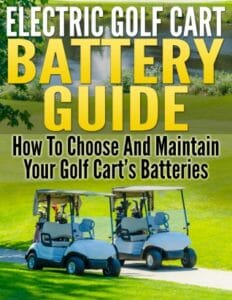
Electric golf cart batteries are usually the most common breakdown problem with a golf cart. To achieve optimum performance & longer battery life CLICK HERE
Product Brand: Electric Golf Cart Battery Guide
Product Currency: USD
Product Price: 19.99
Product In-Stock: InStock
5
Pros
- Helps owners save substantial money by extending battery life through proper maintenance
- Provides specific, actionable steps for battery maintenance and care
- Reduces the frequency of battery replacements
- Can prevent unexpected breakdowns during golf games or community travel
- Potentially improves golf cart performance and reliability
- May increase resale value of the golf cart through better maintenance
- Offers expert knowledge without requiring expensive professional consultations
- One-time purchase that provides ongoing value
Cons
- Requires owners to invest time in learning and implementing maintenance procedures
- Initial cost of the guide (though this should be offset by savings)
- Some maintenance tasks might require purchasing basic tools or supplies
- Not a "quick fix" - requires consistent application of maintenance practices
- May contain some technical information that takes time to understand
- Might not be as helpful for brand new batteries
- Some users may prefer having a professional handle all maintenance
- Results depend on how well the owner follows the instructions